
Storage guide
How to Store and Thaw Samosa Sheets
Learn how to keep ready-made samosa sheets covered, follow pack storage instructions and thaw them carefully to reduce drying, sticking and tearing.
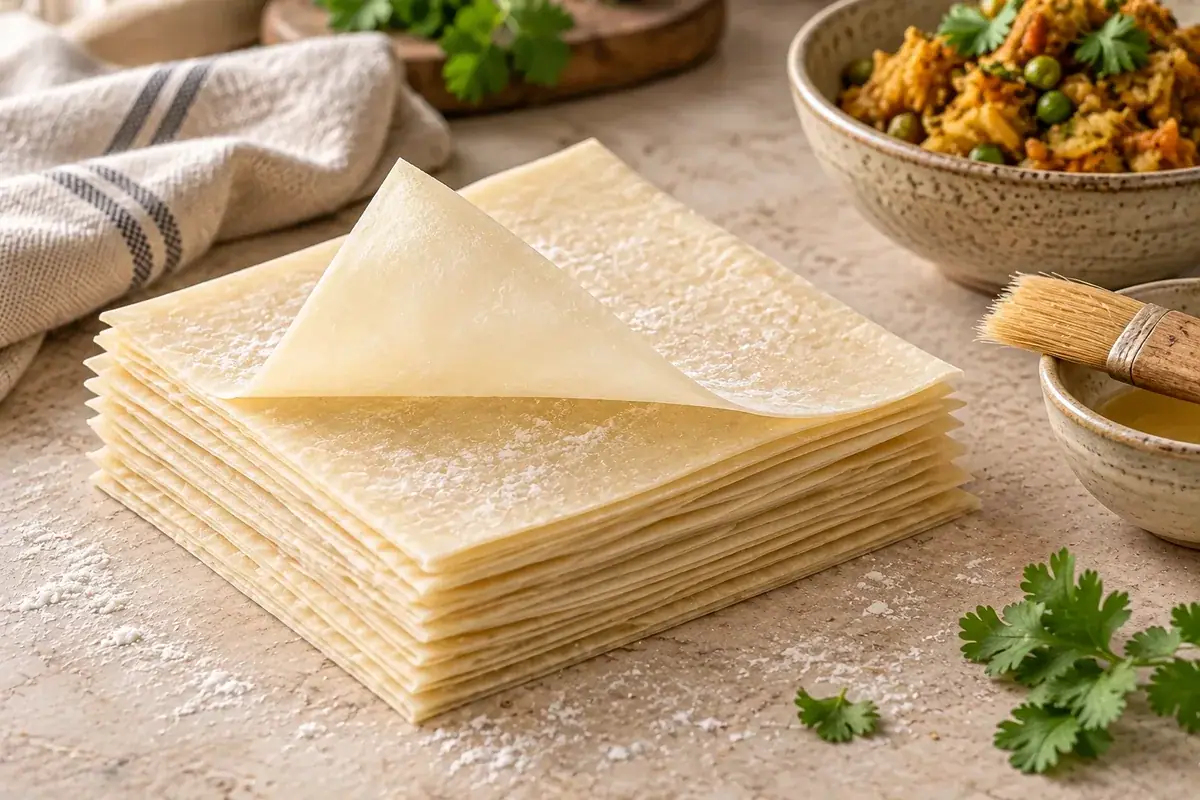
Start with the instructions on the pack
Storage requirements can vary by product and delivery condition. Follow the temperature, expiry and after-opening instructions printed on the pack you receive. If you are ordering for a restaurant or retailer, request the current label information before confirming that the product suits your storage facilities.
Keep cold-storage areas clean and organised, and rotate stock by the labelled dates. Do not rely on a general website article to replace the declaration supplied with the food product.
Thaw gradually before opening
For frozen packs, move the sealed pack to the refrigerator and allow it to thaw gradually. Bring it toward room temperature before opening. Keeping the pack sealed during this transition helps limit condensation directly on the exposed sheets.
Avoid forcing apart sheets that are still stiff or frozen together. Give them more time, then lift from an edge with dry hands. Fast handling can tear corners that would otherwise separate cleanly.
Protect sheets during preparation
Once opened, pastry edges can dry faster than the centre. Remove only the number of sheets needed for the next few folds and keep the rest covered. A clean, slightly damp cloth can protect the working stack, but it should not be wet enough to transfer water onto the pastry.
- Use clean, dry hands and a clean preparation surface.
- Keep the stack away from direct sunlight, fans and hot cooking equipment.
- Return unused sheets to the storage conditions stated on the pack promptly.
- Follow the pack instructions about opened products and refreezing; do not guess.
Troubleshooting common handling problems
Sheets that crack at the fold may still be too cold or may have dried at the edges. Sheets that cling together may have excess surface moisture or may not have thawed evenly. Pause and correct the handling conditions instead of pulling harder.
If a complete pack behaves unexpectedly, keep its label and contact the supplier with the storage history, batch details and photographs. That information is more useful than a general description and helps the team respond accurately.