
Preparation guide
Common Samosa Folding Mistakes and How to Fix Them
Fix common samosa folding problems including dry sheets, overfilling, weak seams and filling leakage with a more consistent preparation routine.
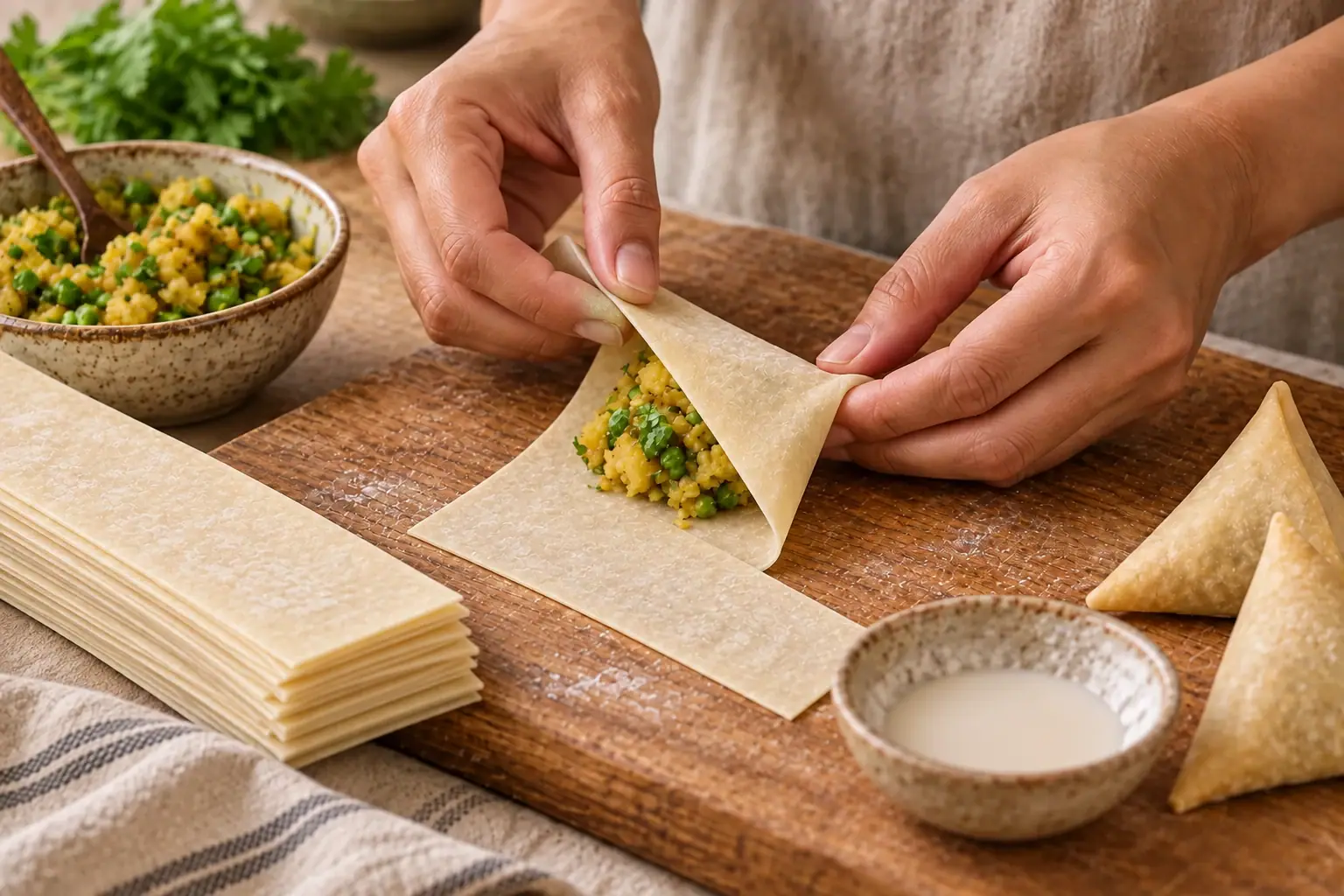
Mistake 1: letting the sheets dry out
An uncovered stack can lose flexibility at the edges. Dry pastry is more likely to crack when it is bent sharply into a cone. Keep the main stack covered and remove only a few sheets at a time.
If a sheet already feels brittle, forcing the fold usually makes the damage worse. Review how long the pack has been open and whether air from a fan or hot equipment is reaching the preparation area.
Mistake 2: using hot or wet filling
Hot filling creates steam and can soften the sheet before it is sealed. Excess moisture also makes portioning less predictable and can weaken the finished shell. Cook the filling fully, reduce unnecessary moisture and allow it to cool before folding.
Use a slotted spoon when a filling releases liquid, and avoid carrying loose gravy into the cone. The filling should still be pleasant to eat; the goal is simply to prevent free moisture from soaking the wrapper.
Mistake 3: adding too much filling
Overfilling leaves too little clean pastry at the top and places pressure on the seam. Begin with a measured portion and increase only after confirming that the cone closes comfortably.
For production batches, use the same spoon or portion weight throughout the session. Consistent portions improve appearance and make purchasing estimates more reliable.
Mistake 4: sealing only part of the edge
A thick flour-and-water paste or an uneven application can leave gaps. Apply a thin, continuous line to the open edge, press the layers together and inspect the full seam. Wipe away heavy excess rather than allowing a lump to form.
- Keep filling away from the sealing edge.
- Press the seam firmly without crushing the filled cone.
- Place completed samosas seam-side down while preparing the batch.
- Cook a few test pieces before assembling a large service quantity.
Build a repeatable folding station
Arrange the covered sheets, cooled filling, portioning utensil, sealing paste and finished tray in the same order each time. A clear workflow reduces handling time and keeps open sheets from sitting exposed while another item is found.
When several people are folding, demonstrate one approved fold and portion before the batch begins. Compare the first few finished pieces together, then make corrections early rather than after the full quantity is prepared.