
Ingredient guide
Samosa Sheets vs Spring Roll Sheets
Understand the practical differences between samosa sheets and spring roll sheets, including shape, folding method and filling support.
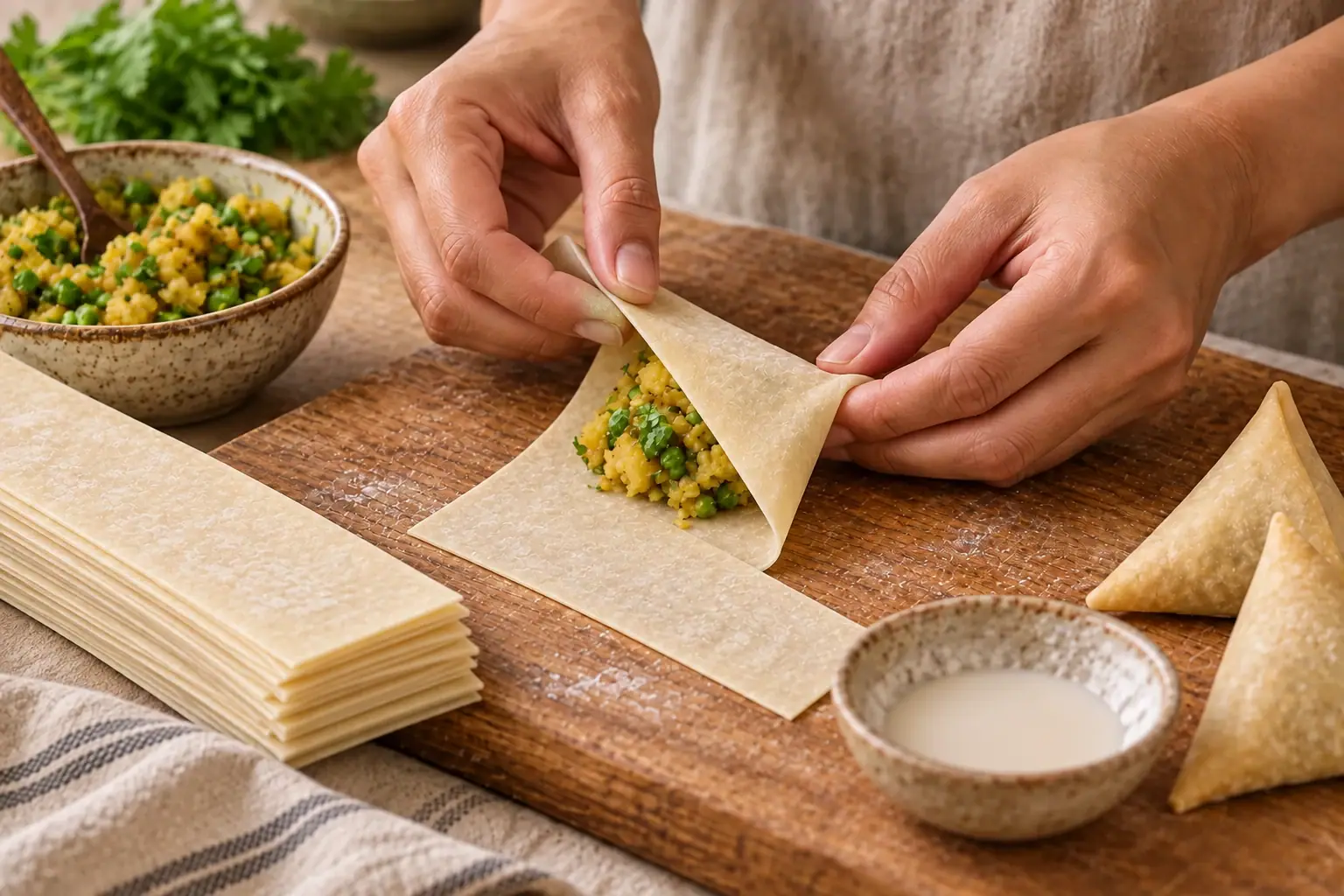
The main difference is the preparation method
A samosa wrapper must form a cone, hold a concentrated portion of filling and close securely at the top. A spring roll wrapper is usually folded around a longer line of filling and rolled into a cylinder. Those shapes place stress on the pastry in different places.
Ready-made samosa sheets are therefore selected for repeated folds and a sealed triangular form. Spring roll sheets are typically thinner and designed around a rolled result. Individual products vary, so the current pack description remains important.
Shape and portion affect the result
Rectangular samosa patti gives the cook a clear strip for building the cone and overlapping the seam. The available width and length influence how much overlap is possible and how large the final pocket can become.
A thin square wrapper may work differently because the corners, rolling direction and sealing surface are not the same. Substituting one product for another can change crispness, strength, appearance and preparation time.
What to check before choosing
Start with your menu item rather than the package name alone. Consider how the item will be shaped, the moisture and weight of the filling, the expected holding time and the cooking method used in your kitchen.
- Choose a sheet intended for the shape you plan to make.
- Confirm the ingredient and allergen declaration on the current pack.
- Test whether the seam stays closed with your filling and cooking method.
- Compare the finished texture after the normal service holding time.
Why a small kitchen trial matters
A visual comparison of uncooked sheets cannot show how they will behave in your workflow. Make a controlled trial using the same filling weight, sealing paste and cooking temperature. Compare tearing during folding, opening during cooking and the finished eating texture.
For a restaurant or catering order, repeatability matters more than one successful sample. Test enough pieces to see whether the result stays consistent across the batch.